
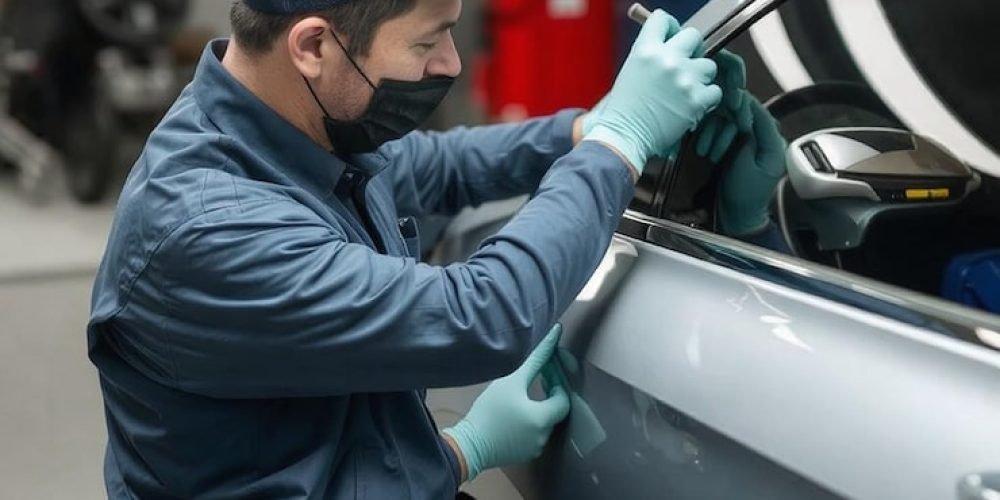
How to Change and Install a Car Door Window: Step-by-Step Guide
When This Job Actually Comes Up
A smashed window after a break-in. A regulator that failed and dragged the glass down into the door. A chip that spread into a crack too wide to ignore. Whatever brought you here, understanding how to change a car door window before you start saves a lot of frustration halfway through.
Door glass is not like rear or front glass. There is no adhesive holding it in. It sits in a channel, clipped to a regulator, and the whole thing lives inside a door panel you have to disassemble first. That part catches people off guard more than the glass itself.
This guide walks through the full process plainly. No shortcuts, no fluff.
Tools You Will Need Before Starting
Get these together before you open the door panel. Stopping halfway to hunt for something is how small trim clips end up cracked on the floor.
You will need a trim panel removal tool. A flathead screwdriver wrapped in tape can work but proper plastic trim tools cause far less damage. A socket set covering the common sizes, usually eight and ten millimetre, handles most of the bolts you will hit. Masking tape is useful for holding the glass in position during fitting. A pair of work gloves is worth wearing throughout.
For some vehicles you will also need a Torx bit set. Many door mechanisms use star-head fasteners rather than standard hex bolts. Worth checking your specific model before you start so you are not caught short.
How to Remove and Change a Car Door Window
Start with the door panel. Most panels attach with a combination of screws and push-fit clips. There is usually a screw hidden behind the door handle, sometimes one in the armrest, and a row of clips around the outer edge. Work the trim tool around the edge slowly and release the clips one at a time. Pulling hard and fast pops the clips out of the panel itself rather than the door, and then they are useless.
Once the panel lifts away, peel back the plastic vapour barrier carefully. It is stuck with a mastic sealant and you want to keep it intact so it goes back properly later.
Lower the window glass to its halfway position if it still moves. This gives you access to the bolts that connect the glass to the regulator arms. On most vehicles these sit in slots along the bottom edge of the glass. Two bolts usually, sometimes three.
Support the glass with one hand before loosening the last bolt. Nothing in the door is going to catch it once those fixings release. Slide the glass upward and out through the top of the door opening. Take your time here, the glass can catch on the inner weatherstrip as it comes out.
That is how to change a car door window on most standard vehicles. The exact layout varies but the principle stays the same across most makes.
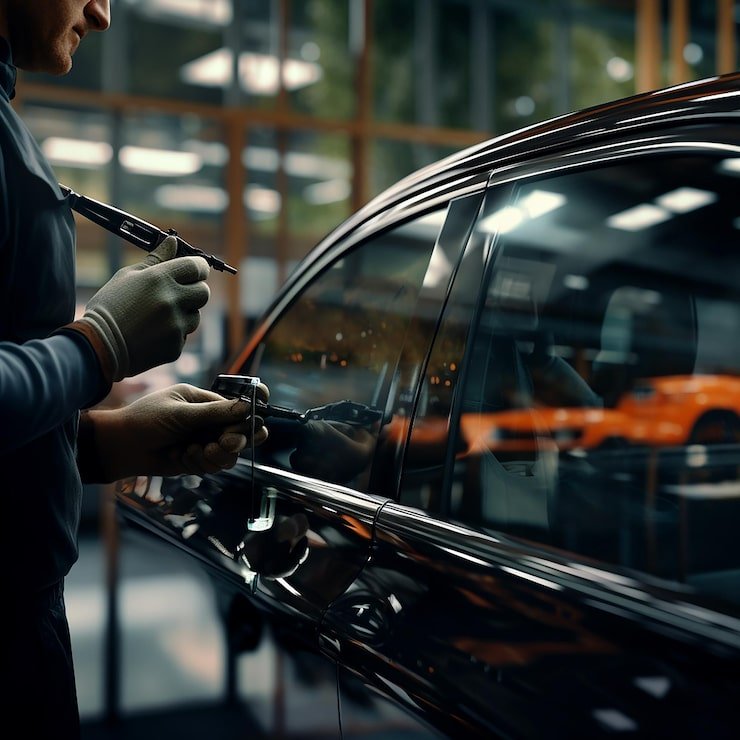
How to Install Car Window Glass Properly
Before the new glass goes in, check the channels and weatherstrips around the top of the door opening. If the rubber is cracked or flattened, the new glass will rattle and water will get in. Replacing worn weatherstrip now costs almost nothing compared to dealing with it after the glass is already fitted.
Lower the glass into the door through the top opening, angling it slightly to clear the inner frame. Guide it down until the bottom edge lines up with the regulator arms. The slots in the glass need to sit over the regulator bolts before you tighten anything.
Hand-tighten the bolts first and then raise and lower the glass manually to check it moves freely in the channels. If it binds or sits crooked at any point, adjust the regulator bolt positions before doing the final tighten. Getting this right before fully securing everything is much easier than trying to adjust a glass that is already bolted tight.
This is the part of how to install car window glass where patience actually pays off. A glass that tracks straight and seals properly at the top takes a few minutes of checking. One that does not will rattle and leak every time it rains.
How to Install Car Door Glass Without Fitting Issues
Once the glass moves freely and sits level at the top of the door, do the final tighten on the regulator bolts. Firm is enough. Over-tightening on glass-to-regulator fittings is a way to crack the glass at the mounting point, particularly on older vehicles where the plastic inserts have gone brittle.
Raise the glass fully and check the fit against the weatherstrip. The top edge should sit flush and make even contact across its full width. If one side presses harder than the other, a slight adjustment to the regulator bolt positions sorts it out. Small moves make a big difference here.
Reconnect any electrical connectors for the window switch before closing the door panel back up. Testing the motor while everything is still accessible is a lot easier than pulling the panel off again because you forgot to plug something in.
Press the vapour barrier back against the door with the mastic sealant intact, then reattach the door panel. Push the clips in firmly until they seat. Loose clips cause the panel to flex and creak every time the door closes, which gets old fast.
Common Mistakes That Cause Problems Later
Rushing the panel removal is the most common one. Trim clips are cheap to replace but finding them broken and rattling inside a door panel is annoying. Slow down around the edges.
Not checking regulator condition before fitting new glass is another one worth mentioning. If the regulator was struggling before the glass broke, fitting new glass onto a worn motor or bent arm just means the problem returns in a few months. While the door is open, check that the mechanism moves smoothly and the motor sounds healthy.
Skipping the weatherstrip check. Old rubber lets water run down inside the door. Over time that causes rust on the inner door frame and moisture in the car. Two minutes of inspection before the glass goes in is worth it.
Finally, not testing before reassembly. Every connector, every switch, every movement of the glass should be confirmed before the door panel goes back on. Discovering a fault afterwards means pulling everything apart again.
When the Job is Better Left to Someone Else
Some door glass jobs are genuinely straightforward. Others are not. Vehicles with frameless doors, where the glass seals directly against the roof without a channel, require precise alignment that is hard to get right without experience. Any door with integrated sensors or touch controls in the glass adds another layer of complexity.
Electric regulator faults that came with the glass failure also change things. Replacing glass on a regulator that needs attention is a job within a job, and diagnosing electrical faults in a door panel is a different skill set to fitting glass.
If the job on your vehicle is looking more involved than expected, Lamar Auto Glass can take a look and give you a clear picture of what the work actually involves before anything is touched.
Yes, but it takes a bit more care. You will need to access the regulator through the door panel and manually position the glass high enough to reach the mounting bolts. Having a second person hold the glass steady while you work the bolts makes this much easier and reduces the risk of the glass shifting unexpectedly inside the door cavity.
Possibly. Some aftermarket glass has elongated slots that allow adjustment, which can work fine. If the holes do not align at all, the glass is not the right part for your vehicle. Fitting glass with misaligned mounting points puts stress on the regulator arms and the glass itself. Worth confirming the part number matches before proceeding.
On almost every modern vehicle, yes. The regulator and mounting bolts are inside the door and not reachable any other way. Some older vehicles with a simple rubber channel mount are an exception, but anything from the last twenty years or so will need the panel off.
Rattling usually comes from one of two places. Either the glass is not sitting fully in the run channels, or the regulator bolts were not tightened evenly and the glass has a slight cant to it. Raising and lowering the window while watching where it contacts the weatherstrip usually shows where the issue is. Small adjustments to the bolt positions resolve most of it.
Worth addressing before fitting the new glass if you can. A struggling motor on a new piece of glass is going to cause problems sooner or later. If the motor is failing, the additional resistance of moving a new, properly fitted glass through tight channels could push it over the edge. Sorting the regulator and motor while the door is already apart saves doing the job twice.