
Rear Windshield Removal & Installation Guide
How to Install and Remove a Rear Windshield: Step-by-Step Guide
Why People End Up Dealing with This
Rear glass does not get damaged as often as the front, but when it goes, it tends to go all at once. A rock off a lorry, a break-in, a reversing accident. Whatever the reason, now you are looking at either sorting it yourself or paying someone else to. If you want to understand how to remove a rear windshield before deciding which route to take, this walks through the whole process plainly.
Worth saying upfront: rear glass on most vehicles is held in with urethane adhesive, not a rubber gasket. That changes how you approach both removal and fitting. Some older vehicles still use the rubber seal method, and that process is quite different. Know which one you have before you start.
How to Remove a Rear Windshield
Clear the area first. Remove any parcel shelf, rear wiper arms, or trim pieces around the inside edge of the glass. Trying to cut around those while they are still in place just creates more problems.
Get a cold knife or an auto glass removal tool. A wire or piano wire set works too. You are going to cut through the urethane bead that bonds the glass to the pinch weld. Start from a corner and work your way around steadily. Do not rush this part.
Have someone on the outside steadying the glass as you cut. Rear windshields are heavy and they will shift once the adhesive gives way. Letting it drop onto the boot lid or the ground is an expensive mistake.
Once the cut is complete, push the glass outward from the inside while your helper guides it from outside. Lift it away carefully and set it down on a padded surface. Even broken glass can cause injuries if it shifts unexpectedly.
How to Remove Back Windshield Safely
Wear gloves throughout. Cut edges on auto glass are not forgiving, and even tempered glass that has shattered into small pieces can still cut badly.
Tape the glass before you start if it is cracked but still in one piece. A few strips of masking tape across the surface keeps the panel together while you work and stops fragments going everywhere the moment the adhesive releases.
Watch the paintwork around the aperture. The removal tool catching on the pinch weld and gouging the metal is a common outcome when someone is rushing. Go steady around the corners especially. That is where the urethane tends to be thickest and where people apply too much force.
Once the glass is out, clean the pinch weld thoroughly. Old adhesive left on the surface will create an uneven base for the new glass and almost always leads to a leak later. A razor blade and some urethane remover handles most of it.
How to Install Rear Windshield
Check the new glass fits before you apply any adhesive. Offer it up to the aperture and confirm the gaps are even all the way around. If it is sitting off to one side or the edges are not lining up, sort that out now. Once the adhesive is on, you have a limited window to adjust.
Apply a urethane primer to both the pinch weld and the bonding area on the glass itself. Let it tack up for the time the product specifies. Skipping the primer is one of the main reasons rear glass develops leaks within a few months.
Run a bead of urethane around the glass in a consistent thickness. Too thin and the seal will not hold properly. Too thick and the glass sits proud of the body and looks wrong. A triangular bead about ten millimetres high tends to work well for most vehicles.
Lift the glass into position and press it firmly into place. Work from the centre outward, pressing down evenly. Use suction cups if you have them. They give you much better control and reduce the risk of the glass shifting as you set it down.
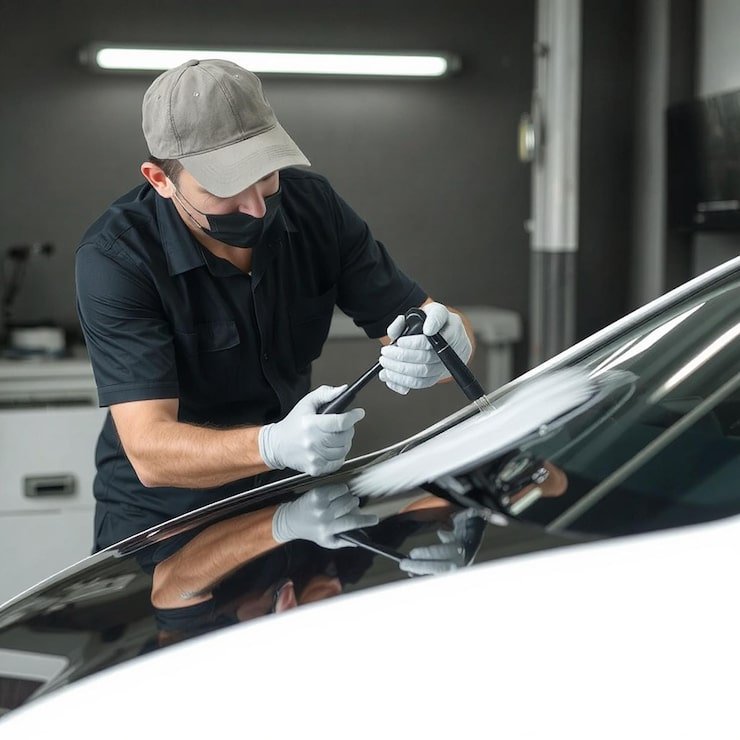
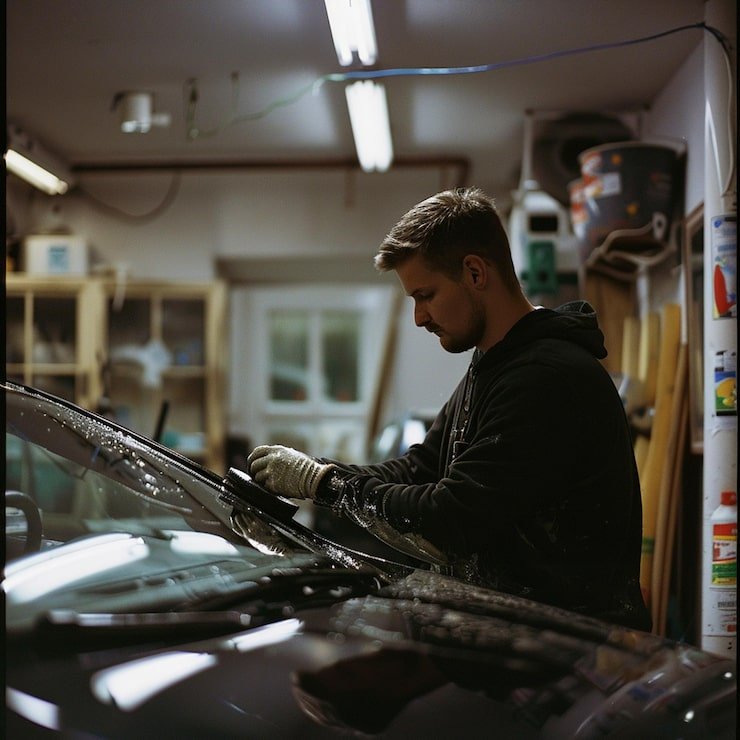
How to Install Back Windshield Properly
Once the glass is seated, check the gaps again from outside. They should be consistent. If one side has dropped or shifted, you have a short time to reposition before the adhesive starts to grip.
Use setting blocks or a few pieces of foam tape on the bottom edge to support the glass while the adhesive cures. The weight of the glass sitting on fresh urethane before it has set can cause it to slide down slightly.
Leave the car undisturbed for the full cure time. Most modern urethane products need at least an hour before the vehicle should be moved and several hours before normal use. Check the product data sheet for the exact times. Driving on fresh adhesive is how glass ends up moving in the frame.
Keep a window open slightly during the cure period. Pressure changes inside the car, from closing a door for example, can push against fresh adhesive and compromise the seal.
Common Mistakes to Avoid
Rushing the removal is the one that causes the most damage. The cold knife slipping, the glass dropping, paint getting scored. All of that comes from trying to cut through adhesive faster than it wants to release.
Not cleaning the pinch weld properly is the next one. Any raised adhesive left on the surface creates a high spot. The new glass rocks on that point instead of sitting flat and the seal is compromised before the job is even finished.
Using the wrong adhesive is more common than people expect. Not all urethane products suit all vehicles or weather conditions. Fast-cure urethane in cold weather can become brittle. Regular urethane in high heat can stay soft longer than expected. Match the product to the conditions.
Fitting without a helper is where a lot of DIY rear glass jobs go wrong. The glass is too heavy and too awkward to position accurately alone. Having someone on the outside guiding it in makes the difference between a clean fit and a crooked one.
When It Makes More Sense to Get Help
Some vehicles make this job significantly harder than others. Heated rear screens with embedded elements, vehicles with cameras or sensors mounted in the rear glass, or cars with particularly tight apertures all raise the difficulty level considerably.
Calibration is another factor. Some rear cameras need recalibrating after the glass is replaced. That is not something you can do with a basic toolkit. Getting it wrong affects how the parking sensors or reversing camera reads distance.
If after reading through this the job feels like more than you want to take on, Lamar Auto Glass handles rear glass replacements and can advise on whether your specific vehicle has any complications worth knowing about before the work starts.
In some ways yes. Rear glass tends to be heavier and more awkward to handle without help. Vehicles with heated rear screens or integrated cameras add another layer of complexity. The basic process is similar to front glass but the margin for error during fitting is less forgiving.
It changes how careful you need to be during removal. Cutting too aggressively near the edges can damage the wiring connections at the sides of the glass. The fitting process is the same but you need to make sure the new glass reconnects to those terminals properly otherwise the heater will not work.
Reattach the wiper arm only after the adhesive has fully cured. Running it on fresh glass that has not settled properly can shift the fit. Most products are ready for that after a few hours but check the adhesive manufacturer guidance for the specific product used.
If the adhesive is still fresh, yes. You have a window of maybe twenty to thirty minutes depending on the product and temperature to reposition the glass before it becomes permanent. After that point, removing and refitting is the only real option.
Yes, it can slow the cure significantly and affect how well the urethane adheres to the pinch weld. Most professionals warm the bonding surface slightly in cold conditions and use a product rated for lower temperatures. Fitting in a heated garage rather than outside in winter makes a real difference to the end result.